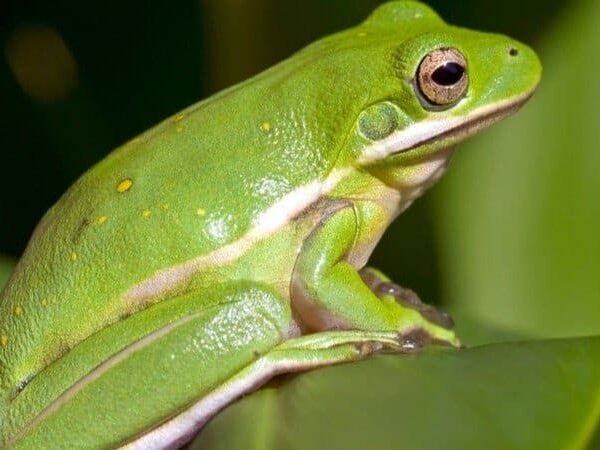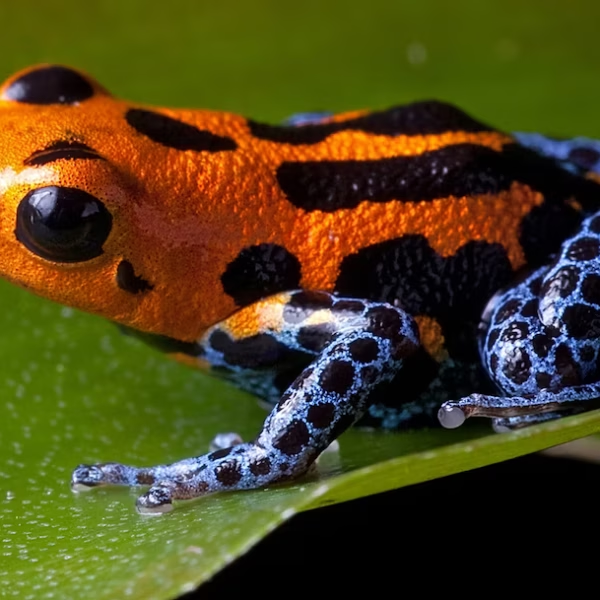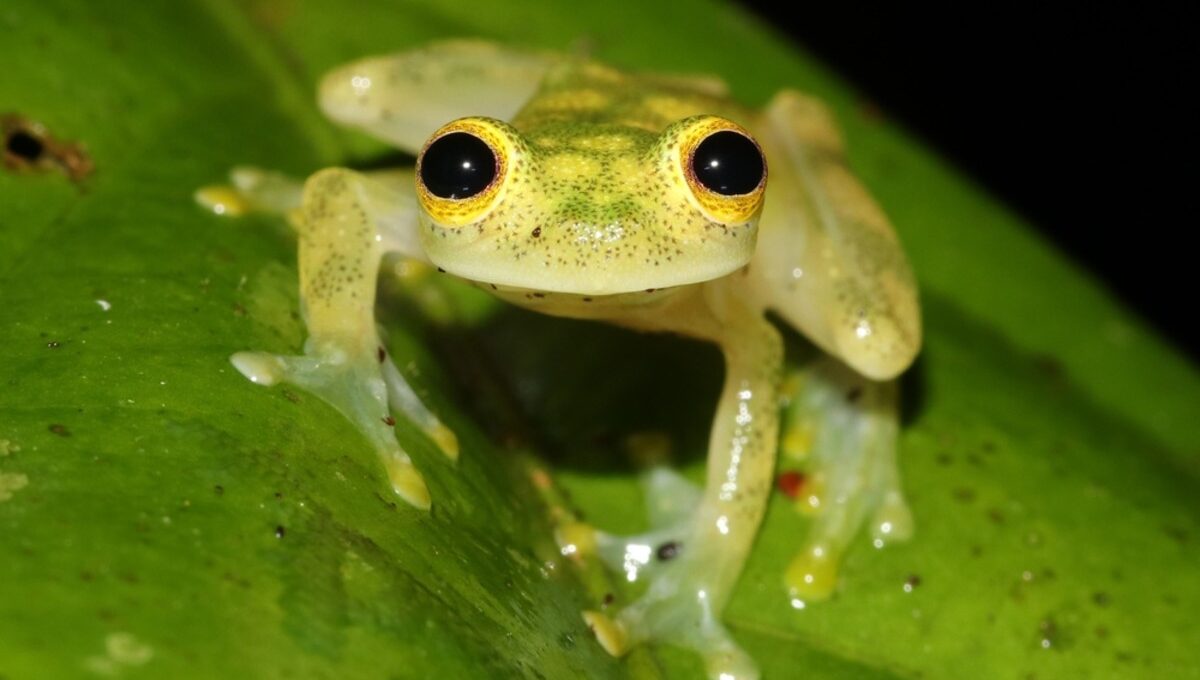

Glass frogs are a special group of frogs that belong to the family Centrolenidae. They are called “glass frogs” because their skin is partly transparent, especially on their belly. This means you can see their internal organs, like their heart, liver, and even their intestines, through their skin. Most glass frogs are bright green on their back, which helps them blend in with the leaves in the rainforest. They are found mainly in Central and South America, living in forests near rivers and streams.
Glass frogs are not just interesting because of their see-through skin. They have many unique behaviors and adaptations that help them survive in their environment. In this article, we will learn about their appearance, where they live, how they reproduce, their life cycle, and the challenges they face in the wild.
Appearance and Features
Glass frogs are small, usually between 3 and 7.5 centimeters long. Their bodies are mostly green, which helps them hide among the leaves. The underside of their body and legs is transparent or translucent, which is why they are called glass frogs. This transparency is not just for show—it helps them stay hidden from predators.
The skin of glass frogs is smooth and moist, like most frogs. Their eyes are big and face forward, which is different from many other tree frogs whose eyes face to the side. This helps glass frogs see better in the trees where they live. Their toes are also special—they have expanded tips that help them grip onto leaves and branches.
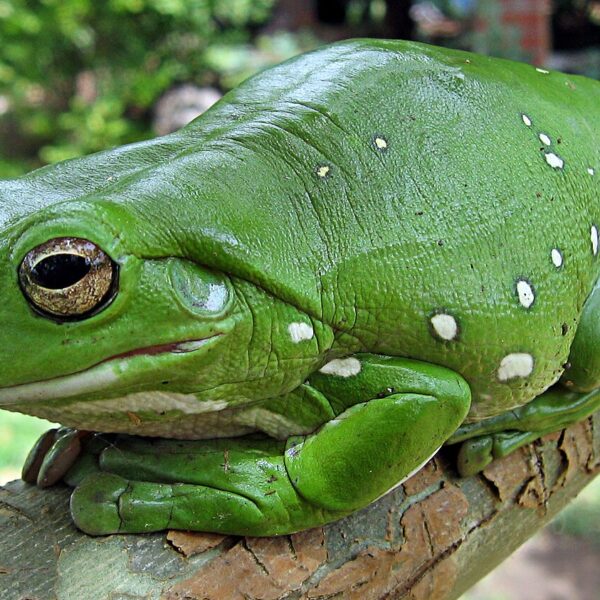
Some glass frogs have spots or patterns on their skin, which can be yellow, white, or even blue. These patterns can look like the eggs they lay, which might help confuse predators. The way their skin looks can be different depending on the species, but most glass frogs share the same basic features.
Where Do Glass Frogs Live?
Glass frogs are found in the rainforests of Central and South America. Their range goes from southern Mexico all the way to Bolivia, and they can also be found in parts of the Amazon and Orinoco River basins. They live in many different types of forests, including cloud forests, rainforests, and even some dry forests.
Most glass frogs live in trees, especially near rivers and streams. They prefer places with lots of green leaves, where they can hide and stay safe. During the breeding season, they move closer to water so they can lay their eggs. Some species live in the canopy, which is the top layer of the forest, while others stay closer to the ground.
Glass frogs need a moist environment to survive. Their skin is very sensitive, so they can easily get hurt by chemicals or changes in the weather. This is why they are mostly found in healthy, undisturbed forests.
How Do Glass Frogs Survive?
Glass frogs have many special adaptations that help them survive in the wild. One of the most important is their transparent skin. When a glass frog is resting on a green leaf, its body blends in with the leaf, making it hard for predators to see. This is called camouflage.
Scientists have found that the transparency of glass frogs is not just about color. When glass frogs sleep, they can hide most of their red blood cells in their liver. This makes their skin even more transparent and helps them blend in better. This is a unique ability that most other animals do not have.
Glass frogs also have a special way of hiding their outline. Their legs are more translucent than their body, so when they rest with their legs around their body, the edge between their body and the leaf is softer. This makes it harder for predators to see where the frog ends and the leaf begins. This is called “edge diffusion.”
Another way glass frogs stay safe is by being active at night. Most glass frogs are nocturnal, which means they are awake and moving around at night. This helps them avoid many daytime predators, like birds.
Life Cycle of Glass Frogs
The life cycle of glass frogs is similar to other frogs, but with some special features. Glass frogs start their lives as eggs, which are laid on leaves overhanging streams or rivers. The male glass frog calls to attract a female, and once she arrives, they mate on the leaf. After mating, the female lays her eggs on the leaf, and the male guards them.
The eggs are usually laid in clutches, which means several eggs are laid together. The male stays with the eggs to protect them from predators. After about 10 to 20 days, the eggs hatch, and the tadpoles fall into the water below. The tadpoles then live in the water, feeding on leaf litter and other small bits of food until they grow into froglets.
Once the tadpoles become froglets, they leave the water and return to the trees. As they grow, they become adult glass frogs and start the cycle again. Glass frogs can live for several years, depending on the species and the environment.
Mating and Parental Care
Mating in glass frogs is a special process. The male glass frog calls from a leaf near a stream to attract a female. Once a female arrives, they mate in a position called amplexus, where the male wraps his arms around the female. After mating, the female lays her eggs on the leaf, and the male stays to guard them.
Glass frogs are known for their parental care. In many species, the male guards the eggs for several days, protecting them from predators. Some males even call for other females and mate with them on the same leaf, so they end up guarding multiple clutches of eggs.
Female glass frogs may also stay with the eggs for a short time after laying them, but this depends on their health and the environment. If the female is strong and healthy, she may leave the eggs sooner. If she is weak, she may stay longer to help protect the eggs.
Tadpoles and Their Habits
Once the eggs hatch, the tadpoles fall into the water below. Glass frog tadpoles are different from other frog tadpoles. They have long, powerful tails and low fins, which help them swim in fast-moving water. They feed on leaf litter and other small bits of food in the stream.
Glass frog tadpoles live in the water until they are ready to become froglets. During this time, they grow and change, developing legs and lungs. Once they are ready, they leave the water and return to the trees.
Some glass frog tadpoles have a special adaptation—they live buried in leaf packs in the stream. This helps them stay hidden from predators and gives them a safe place to grow.
Diet and Feeding
Glass frogs are carnivores, which means they eat other animals. Their diet mainly includes small insects like crickets, moths, flies, and spiders. Some glass frogs also eat smaller frogs.
Glass frogs are good hunters. They use their long, sticky tongues to catch insects. They are most active at night, when they come out to hunt. During the day, they rest on leaves, hiding from predators.
Glass frogs need to eat a lot of food to stay healthy. Their small size means they have to eat often, but they also have to be careful not to attract predators while they are hunting.
Threats and Conservation
Glass frogs face many threats in the wild. One of the biggest threats is habitat loss. Deforestation is destroying the forests where glass frogs live, leaving them with nowhere to go. This is especially true in South America, where forests are being cut down for farming and development.
Another threat is pollution. Glass frogs are very sensitive to chemicals in the water and air. Even small amounts of pollution can hurt their health and make it harder for them to survive.
Glass frogs are also threatened by climate change. Changes in temperature and rainfall can affect their habitat and make it harder for them to find food and water. Invasive species, like non-native frogs and insects, can also compete with glass frogs for resources.
Because of these threats, many glass frog species are considered endangered or critically endangered. All glass frogs are protected under the Convention on International Trade in Endangered Species (CITES), which means that international trade in glass frogs is regulated.
Predators and Defense
Glass frogs have many predators, especially in their tadpole stage. One of the main predators is the “frog fly,” which lays its eggs in glass frog eggs. When the fly eggs hatch, the maggots feed on the frog embryos.
Adult glass frogs are also hunted by birds, snakes, and other animals. To avoid predators, glass frogs use their transparent skin and camouflage. They also stay still and quiet when they sense danger.
Some glass frogs have special behaviors to protect themselves. For example, some species flatten their bodies to look less noticeable, while others lift their bodies off the leaf to make themselves look bigger.
Importance of Glass Frogs
Glass frogs are important for many reasons. They help control insect populations by eating pests like flies and mosquitoes. They are also part of the food chain, providing food for other animals.
Glass frogs are also important for science. Their transparent skin and unique ability to hide their blood cells have helped scientists learn more about how animals can avoid predators and survive in the wild. Studying glass frogs could even help doctors understand how to prevent dangerous blood clots in humans.
Glass frogs are also a symbol of the health of the rainforest. When glass frog populations are strong, it means the forest is healthy. When their numbers go down, it is a warning sign that something is wrong.
Fun Facts About Glass Frogs
- Glass frogs can hide their red blood cells in their liver to become more transparent.
- Some glass frogs have spots that look like their eggs, which might help confuse predators.
- Glass frogs are mostly nocturnal, which means they are active at night.
- Glass frogs lay their eggs on leaves overhanging streams, not in the water.
- Glass frogs are protected by international law, so it is illegal to trade them without a permit.
Conclusion
Glass frogs are amazing animals with many unique features and behaviors. Their transparent skin, special adaptations, and important role in the ecosystem make them a fascinating subject for study. However, glass frogs are facing many threats, including habitat loss, pollution, and climate change. Protecting glass frogs means protecting the rainforests where they live, and ensuring that future generations can enjoy these incredible creatures.
By learning more about glass frogs, we can help raise awareness about the importance of conservation and the need to protect our planet’s biodiversity. Glass frogs are not just beautiful—they are a vital part of the natural world.