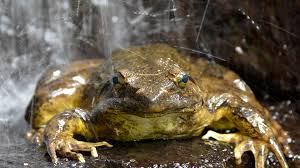

When people think about frogs, they usually picture small, green animals hopping around ponds, croaking loudly, or sitting on lily pads.
But deep in the rainforests of Africa, there is a frog so huge that it surprises almost everyone who learns about it. This amazing creature is called the Goliath frog (Conraua goliath).
The Goliath frog is not just another frog, it is the largest frog in the world. It can weigh as much as a newborn baby and jump several feet in one leap!
Despite its giant size, this frog is shy, quiet, and gentle.
In this article, we will explore everything you need to know about the Goliath frog , its appearance, habitat, diet, lifestyle, reproduction, threats, and conservation. We will also discuss why this species is important to nature and what can be done to protect it.
Let’s dive into the fascinating world of the Goliath frog, the gentle giant of Africa’s rainforests.
What Is the Goliath Frog?
The Goliath frog (Conraua goliath) belongs to the family Conrauidae. It is an amphibian, which means it can live both in water and on land. Among more than 7,000 known frog species, the Goliath frog stands out for its gigantic size.
Adult Goliath frogs can reach 32 centimeters (12.6 inches) in length from nose to bottom and can weigh up to 3.3 kilograms (7.3 pounds). Some individuals are even larger. To put that in perspective, that’s about the size of a domestic cat or a human baby!
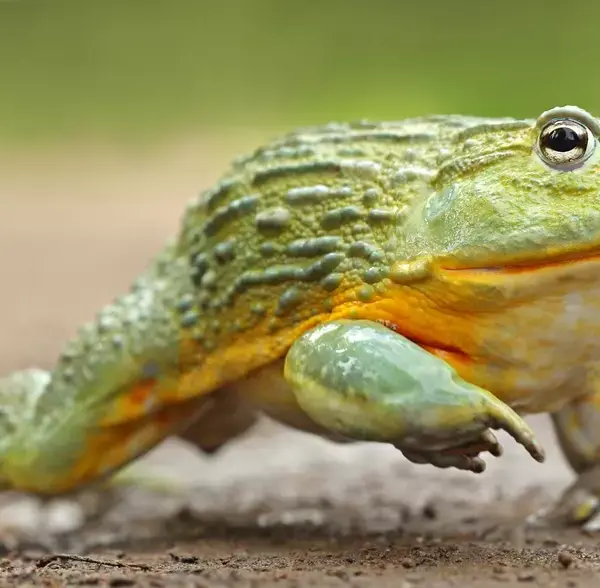
Despite its massive size, the Goliath frog has the same basic features as other frogs , moist skin, long back legs, large eyes, and a wide mouth. Its skin color ranges from green to brown with darker patterns, which helps it blend into the forest environment.
Its body is muscular and strong, especially the hind legs. These powerful legs help it jump long distances and swim quickly through fast rivers. The Goliath frog is truly a marvel of natural evolution.
Where Does the Goliath Frog Live?
The Goliath frog is found only in a small area of Central Africa, mainly in Cameroon and Equatorial Guinea. This limited range makes it a localized and vulnerable species.
These frogs live in tropical rainforests, especially near clean, fast-flowing rivers and waterfalls. The environment must be humid, warm, and full of vegetation. Goliath frogs depend on the forest canopy for shade and on riverbanks for breeding.
Key Habitat Features-
- Clean, oxygen-rich water for breathing and breeding
- Smooth rocks and riverbeds for hiding
- Thick vegetation for protection and moisture
- Stable climate with consistent rainfall
Because Goliath frogs are very sensitive to pollution and habitat change, they can only survive in pristine, undisturbed environments. Even small changes in water quality can threaten their survival.
Physical Characteristics
The Goliath frog is impressive not only for its size but also for its appearance and strength.
Size and Weight-
- Average length- 25–32 cm (10–13 inches)
- Weight- 2.5–3.3 kg (5.5–7.3 lbs)
- Some individuals may grow even larger
Color and Texture-
Their skin is greenish-brown or olive, blending perfectly with moss, rocks, and leaves. The skin on their back is slightly rough, while the underside is smoother and lighter in color.
Legs and Strength-
Their hind legs are extremely strong and long. These muscles are responsible for their remarkable jumping and swimming abilities. A Goliath frog can jump more than three meters (about 10 feet) in a single leap!
Eyes and Vision-
They have large, round eyes that provide excellent vision, especially at night. This helps them spot prey easily in dark, forested environments.
Behavior and Lifestyle
Goliath frogs are mostly nocturnal, meaning they are active at night and rest during the day.
During daylight hours, they hide under rocks, roots, or in shaded areas near water to avoid predators and prevent dehydration. At night, they become active , hunting, feeding, and moving through their territory.
Unlike many other frog species, Goliath frogs do not croak loudly. In fact, they are often silent. Scientists believe that the Goliath frog’s lack of a vocal sac , the organ that helps frogs make loud sounds , may explain their quiet behavior.
These frogs are solitary creatures. They prefer to live and hunt alone, except during the breeding season when males and females come together to reproduce.
Goliath frogs are also known for their engineering behavior. Males can move stones and create small pools to protect their eggs , a rare behavior among frogs and a sign of intelligence and strength.
Diet- What Do Goliath Frogs Eat?
As carnivores, Goliath frogs eat other animals. Their diet is quite diverse, and their size allows them to hunt larger prey than most frogs.
Typical Diet Includes-
- Insects (beetles, crickets, grasshoppers)
- Small snakes
- Fish and tadpoles
- Crustaceans (especially river crabs)
- Other frogs
- Small turtles and even small birds occasionally
Goliath frogs are ambush predators. They stay still, wait patiently, and when prey comes close, they use their sticky tongue to catch it in a lightning-fast motion. Then they swallow it whole.
This hunting technique saves energy and makes them efficient hunters, even in fast-flowing rivers.
Reproduction and Life Cycle
The Goliath frog’s life cycle follows the same stages as most amphibians, but with some special twists.
Mating and Nest Building.
The breeding season usually happens during the rainy season, when rivers are full and flowing. Males take on an active role in preparing nests. They use their powerful legs to move rocks, clear debris, and build small pools along riverbanks. These pools serve as safe breeding spots.
This is a remarkable behavior , imagine a frog pushing rocks heavier than itself just to protect its future offspring!
Egg Laying-
Once the nest is ready, the female lays hundreds of eggs in the pool. The male often stays nearby to guard the eggs from predators like fish and insects.
Tadpoles-
The eggs hatch into tadpoles after several days. Interestingly, Goliath frog tadpoles are vegetarian, feeding mostly on one type of water plant that grows near the nest.
As the tadpoles grow, they develop legs, lose their tails, and eventually transform into small frogs , a process called metamorphosis.
Growth-
It takes up to 3 years for a Goliath frog to reach full adult size. Once mature, they leave their birth pools and start living independently.
Predators and Natural Threats
Despite their large size, Goliath frogs are not completely safe from danger. In the wild, they face several natural predators, especially during their early life stages.
Predators Include-
- Snakes
- Birds (like herons and eagles)
- Monitor lizards
- Larger fish (that eat eggs and tadpoles)
For adult Goliath frogs, their main predators are humans. People hunt them for food, for the pet trade, and sometimes for their skin.
Threats to Survival
The Goliath frog is listed as Endangered on the International Union for Conservation of Nature (IUCN) Red List. Its population has been decreasing for several decades due to human activities.
Main Threats-
Habitat Destruction
Deforestation for logging, agriculture, and urban development destroys the forests and rivers where Goliath frogs live. Without clean water and dense vegetation, they cannot survive.
Pollution
Chemicals from farms and factories flow into rivers, poisoning the water and killing tadpoles and adults.
Hunting and Overexploitation
In some local communities, Goliath frogs are hunted as a source of food. They are also captured and sold as exotic pets or for display in zoos.
Climate Change
Changes in rainfall patterns and temperature affect breeding seasons, river levels, and food availability.
Limited Range
Because they live only in a small area of Africa, even small environmental changes can have a big impact on their population.
Conservation Efforts
Many organizations and local governments are working to protect the Goliath frog and its habitat.
Key Conservation Actions-
Protected Areas-
Some regions in Cameroon and Equatorial Guinea are now designated as wildlife reserves to protect the Goliath frog’s natural environment.
Anti-Hunting Laws-
Local authorities have introduced restrictions on hunting and trading Goliath frogs.
Community Education-
Programs are teaching local people about the importance of protecting these frogs and the benefits of conserving forests and rivers.
Scientific Research-
Scientists are studying Goliath frogs to understand their behavior, diet, and reproduction, which can help in future conservation planning.
Eco-Tourism-
Promoting responsible eco-tourism brings income to local communities while encouraging the protection of natural habitats.
These efforts aim to ensure that the Goliath frog will continue to thrive in the wild for generations to come.
Fun and Amazing Facts
Here are some fun and surprising facts about the world’s largest frog-
- The Goliath frog can jump over 3 meters (10 feet) in a single leap!
- It is so strong that males can move rocks heavier than their own body weight.
- Unlike most frogs, Goliath frogs do not make loud croaking sounds.
- They can live up to 15 years in the wild and even longer in captivity.
- Their tadpoles are herbivores, while adults are carnivores.
- The Goliath frog’s large size helps it survive strong river currents.
- They are excellent swimmers, using their long legs like paddles.
- Their presence is an indicator of a healthy ecosystem, since frogs are sensitive to pollution.
Why the Goliath Frog Is Important
Every living creature plays a role in nature’s ], and the Goliath frog is no exception.
Ecological Importance-
They help control insect and small animal populations, maintaining balance in the food chain.
They are food for larger predators, contributing to the ecosystem’s diversity.
Their presence indicates clean water and a healthy environment.
Scientific Importance-
Studying Goliath frogs helps scientists understand evolution, adaptation, and how environmental changes affect amphibians.
Cultural Importance-
In some African communities, the Goliath frog is part of local folklore and symbolizes strength and endurance.
Protecting the Goliath frog is not just about saving one species , it’s about preserving an entire ecosystem that supports countless other life forms.
The Future of the Goliath Frog
The future of the Goliath frog depends on how humans treat the environment. If deforestation, pollution, and hunting continue, this incredible frog could disappear from the wild within our lifetime.
However, there is hope. Conservation programs, international awareness, and local education are making a difference. Many people now realize that protecting the Goliath frog also means protecting forests, rivers, and biodiversity.
By supporting eco-friendly practices, reducing pollution, and respecting nature, we can help ensure that future generations will still hear about , and maybe even see , the mighty Goliath frog.
Conclusion
The Goliath frog is one of nature’s most fascinating animals. With its enormous size, powerful legs, and quiet strength, it truly deserves its name , “Goliath.”
Yet, this giant frog is also a fragile symbol of how delicate our ecosystems are. It depends on clean rivers, healthy forests, and balanced environments to survive.
By understanding, respecting, and protecting this amazing amphibian, we not only save a unique species but also protect the natural world that sustains all life on Earth.
The Goliath frog reminds us that even the biggest creatures need our care and protection. In the heart of Africa’s rainforests, this gentle giant continues to leap , a living proof of nature’s wonder and strength.